
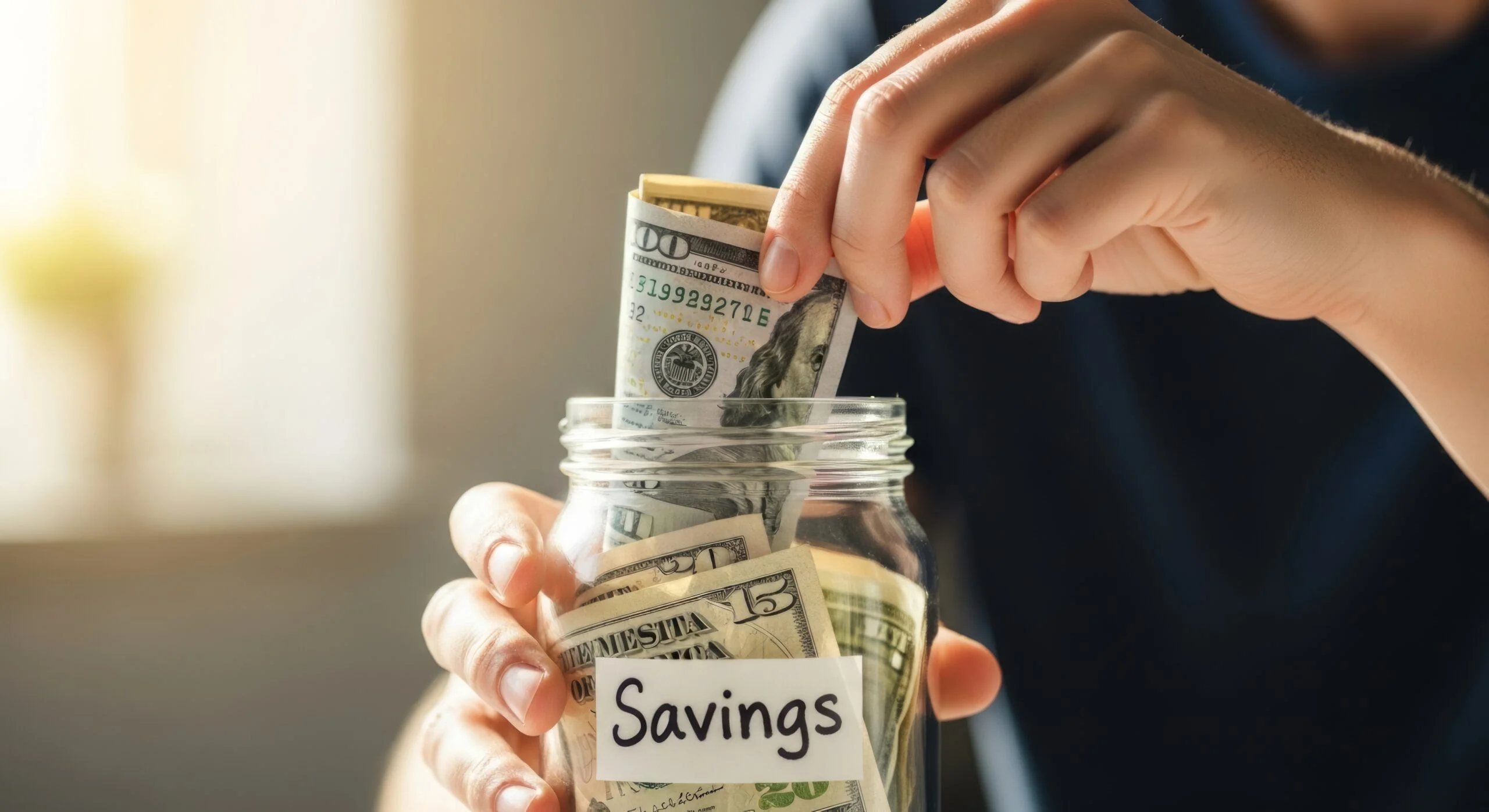
Let’s be honest: most financial advice feels like it was written for people who already have plenty of money. It’s easy to save when you have a six-figure salary, but what if you’re barely covering rent? What if your bank account hits zero two days before payday?
If you feel like saving is impossible right now, you aren’t alone. But here is the good news: you don’t need a massive paycheck to start building a safety net. You just need a different strategy.
In this guide, we are going to show you how to save money on a low income fast without using unrealistic tips like “stop buying lattes” or “just buy a house.” We’re talking about real-world steps for real-world budgets.
Why Saving on a Low Income Feels So Hard
Before we dive into the “how,” we have to acknowledge the “why.” Saving money when funds are tight is mentally exhausting.
When you live paycheck to paycheck, how to break the cycle becomes a question of survival, not just math. Small emergencies—like a flat tire or a broken tooth—feel like a financial catastrophe because there is no cushion to catch you.
The “poverty premium” is also real. It’s more expensive to be broke because you can’t always buy in bulk, and you might get hit with overdraft fees. Understanding that the system is stacked against you is the first step toward beating it.
How to Save Money on a Low Income Fast: The Step-by-Step Plan
You don’t need to save hundreds of dollars a week to make progress. Speed comes from consistency and focus. Here is how to get the ball rolling immediately.
1. Master Zero-Based Budgeting for Beginners: Step by Step
The biggest mistake people make is waiting to see “what’s left over” at the end of the month. On a low income, there is never anything left over.
Zero-Based Budgeting means giving every single dollar a job before the month begins.
- Step 1: List your total monthly income.
- Step 2: List your fixed expenses (rent, utilities, phone).
- Step 3: List your variable expenses (groceries, gas).
- Step 4: Assign every remaining cent to a “Savings” or “Debt” category until your income minus your outgoings equals exactly zero.
2. The “Save First” Rule
The moment your paycheck hits your account, move $5, $10, or $20 to a separate savings account. Do this before you pay a single bill. If you wait until the end of the month, that money will disappear.
Expense-Cutting Strategies That Actually Work
When income is low, you can’t just “spend less.” You have to optimize. Forget the generic advice; try these targeted moves:
- The “Subscription Audit”: We all have that $9.99 app we forgot about. Check your bank statement for the last 30 days. If you haven’t used it twice a week, cancel it today.
- The Power of Generic: In US grocery stores, “Store Brands” are often made in the same factories as name brands but cost 30% to 50% less. Switching to generic for just five staples (milk, eggs, flour, cereal, soap) can save $40 a month.
- Utility Assistance: If your income is below a certain level, look into the LIHEAP program in the USA. It helps low-income households pay for heating and cooling. This can free up $50–$100 a month instantly.

How to Build an Emergency Fund from Scratch
An emergency fund isn’t for a vacation; it’s for when life goes wrong. It is your “peace of mind” fund.
The First $1,000 Savings Challenge Plan
Don’t try to save three months of expenses yet. That’s too overwhelming. Your only goal right now is to reach $1,000.
- Week 1-4: Save $25 per week by cutting one non-essential. ($100 total)
- The “Found Money” Rule: Did you get a tax refund? A birthday gift? A small bonus? 100% of “surprise money” goes into this fund until you hit $1,000.
- Sell the Clutter: Most of us have $200 worth of stuff in our closets or garages. Use apps like Facebook Marketplace or Poshmark to turn that clutter into cash for your fund.
Once you have that $1,000, you stop being a victim of “bad luck.” A flat tire is now just an annoyance, not a crisis.
Small Money Habits That Build Wealth
Wealth isn’t just about big investments; it’s about small money habits that build wealth over time.
- The 24-Hour Rule: Before buying anything over $20 that isn’t a necessity, wait 24 hours. Most of the time, the “urge” to buy will pass.
- Rounding Up: Use a banking app that “rounds up” your purchases to the nearest dollar and puts the change in savings. It feels invisible, but it adds up to hundreds of dollars a year.
- Cash Envelopes: If you find yourself overspending on “fun” or “eating out,” switch to cash for those categories. When the envelope is empty, the spending stops.
Common Mistakes to Avoid
- Using Your Savings for “Wants”: If it’s not an emergency (car repair, medical bill, job loss), don’t touch the fund.
- Neglecting High-Interest Debt: If you have credit card debt with 25% interest, that is a financial emergency. Save your first $1,000, then pivot to paying off that debt.
- Giving Up After One Slip-Up: You will have a bad week where you overspend. Don’t let one bad day turn into a bad month. Just start again tomorrow.
Simple Action Plan for the Next 30 Days
- Day 1-3: Print out your last bank statement and highlight every “want” (not need) you spent money on.
- Day 4-10: Set up a separate high-yield savings account (many are free in the USA) so your savings aren’t in your checking account where you can see it.
- Day 11-20: Call your internet or phone provider and ask for a lower rate or a “loyalty discount.”
- Day 21-30: Execute your first $25 “Save First” transfer.
FAQ: Saving on a Low Income
How can I save when I have $0 left after bills?
This is where Zero-Based Budgeting for beginners, step by step, is vital. You have to look for tiny leaks. Even saving $1 a day is better than $0. It’s about building the muscle of saving.
Is $1,000 really enough for an emergency fund?
It’s a “Starter Fund.” It covers the most common US emergencies, like a car battery, a plumbing leak, or a quick trip to urgent care. Once you hit $1,000, your goal will shift to saving 3–6 months of expenses.
Should I save money or pay off debt first?
Always save your first $1,000 emergency fund first. If you pay off debt but have $0 in the bank, you’ll just end up using your credit card again the next time your car breaks down.
What are the best apps for saving on a low income?
Look for apps like Chime or Ally that have no monthly fees and no minimum balance requirements. Avoid banks that charge you “maintenance fees” for having a low balance.
Final Thoughts: You’ve Got This!
Saving money on a low income is a marathon, not a sprint. There will be months where it feels like you’re taking one step forward and two steps back. That’s okay. The goal isn’t perfection; it’s progress.
By focusing on how to save money on a low income fast through small, consistent wins, you are taking control of your future. Every dollar you save is a “seed” for your future wealth. Keep going—your future self will thank you for the work you are doing today.


